Pest Control Services in Warren County for Ant Control That Works
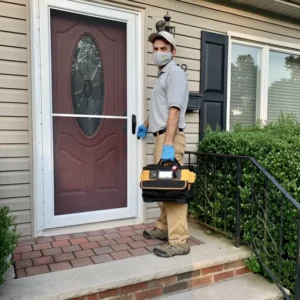
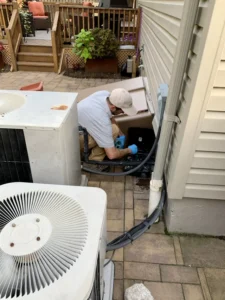
Ant problems have a way of starting small and then taking over the conversation in a house. It begins with a few workers crossing a kitchen counter, usually near the sink or pet bowls. A day later, the line is thicker. By the weekend, someone is wiping up winged ants near a window and wondering whether this is just a nuisance or the start of something expensive.
In Warren County, that uncertainty is common. Ants thrive here because the conditions suit them. Warm months bring activity outdoors, and once dry weather or heavy rain shifts their food and moisture patterns, many species move closer to homes. Add mulch beds, mature trees, older foundations, and the constant availability of crumbs and water indoors, and ants have everything they need.
The hard truth is that do it yourself ant control often handles the symptom, not the colony. Store shelf sprays can kill the ants you see, but they rarely touch the nest. In some cases, the wrong treatment can make the problem worse by scattering the colony into multiple satellite nests. That is why homeowners looking for real results often turn to Pest Control Services Warren County professionals who understand local ant behavior, building construction, and treatment timing.
Why ant control takes more than a quick spray
Ants are not a single problem. They are a category of problems. Different species behave differently, feed differently, and nest in very different places. That matters because the treatment that works well for odorous house ants may do very little for carpenter ants. The bait that draws one species strongly may be ignored by another if their food preference has shifted from sweets to proteins.
A lot of frustration comes from treating all ants the same. People see a trail, wipe it up, spray the baseboard, and expect it to stop. Sometimes it does, for a day or two. Then the ants reappear in the pantry, the bathroom, or around a basement window. That cycle repeats because the visible ants are only the foragers. The real issue sits behind a wall, beneath a slab, under a stone walkway, in a rotting stump, or deep in a damp section of wood.
Professional ant control starts with identification and inspection, not product first. That may sound less dramatic than a strong spray, but it is usually the difference between temporary relief and durable control.
The ants Warren County homeowners deal with most often
In this area, several ant species show up again and again. Odorous house ants are common in kitchens and baths. They are small, persistent, and notorious for forming long trails. Crush one and you may notice a sour smell, which is where the name comes from. These ants are opportunistic and can shift nest sites quickly, especially after a disturbance.
Pavement ants are another regular visitor. They often nest under sidewalks, driveways, patios, and foundation edges. Homeowners usually notice them when they push up tiny mounds of soil or appear indoors along baseboards at ground level. They are not usually destructive, but they can become a chronic nuisance if exterior nesting sites are not addressed.
Carpenter ants deserve special attention. They do not eat wood the way termites do, but they excavate it to create galleries. They prefer damp, softened, or previously damaged wood, which is why they are often linked to leaks, condensation, clogged gutters, or poorly ventilated crawl spaces. A carpenter ant sighting does not always mean structural damage, but it should never be shrugged off.
Then there are field ants, acrobat ants, and occasional invasive species that show up depending on the property, weather patterns, and landscaping. Each calls for a slightly different approach. That is one reason experienced Pest Control Services Warren County teams spend time outdoors during the inspection instead of focusing only on where ants are seen inside.
What a real inspection looks like
A useful ant inspection is methodical. It goes beyond the kitchen and traces why the ants are there in the first place. A technician worth hiring will look at moisture sources, food sources, structural gaps, vegetation touching the house, and areas where colonies are likely to be nesting. They will ask when the activity started, where it is heaviest, whether it changes after rain, and what products have already been used.
On a typical property, the inspection often includes window trim, door thresholds, utility penetrations, attic spaces, basements, crawl spaces, mulch beds, fence lines, and tree stumps. If carpenter ants are suspected, moisture readings and a closer look at vulnerable wood are often part of the process. The point is not to make the visit feel complicated. The point is to find the colony pressure and the access routes, because that is what determines the treatment plan.
One of the most common mistakes homeowners make is focusing only on one room. Ants may show up in a second floor bathroom, for example, but the colony could be tied to a moisture problem around a soffit vent, a roof leak above insulation, or a tree branch bridging the roofline. Without tracing that path, treatment becomes guesswork.
Why store products often disappoint
There is nothing wrong with trying a simple wipe down and sanitation reset when you first spot a few ants. Sometimes that is enough if the issue is isolated and outdoor pressure is low. But once the activity persists, over the counter control has some real limits.
Broad contact sprays kill quickly, which feels satisfying, but they can also disrupt the ants before they carry bait or toxicant back to the nest. Repellent products may push ants into walls or adjacent rooms. Strong scented cleaners can erase trails temporarily while the colony simply lays down a new route by nightfall. I have seen homeowners spend weeks rotating through aerosols, traps, and granules, only to end up with more activity in more places.
Baiting sounds simple but is surprisingly easy to get wrong. Ant feeding preferences change. A colony taking sweet bait one week may be more interested in grease or protein the next. Placement matters too. Put bait in the wrong spot, too close to a repellent residue, or in an area that dries out too fast, and the ants may ignore it.
The other issue is patience. Effective baiting often looks worse before it looks better because ants recruit more nestmates to the food source. People understandably panic and spray over the bait, which short circuits the whole strategy.
Signs the problem needs professional help
Some ant issues are manageable with sanitation and light monitoring. Others call for a more deliberate response. The following signs usually mean it is time to bring in a pro:
- You keep seeing ants in multiple rooms even after cleaning and using store products.
- Activity returns within days, especially around sinks, dishwashers, windows, or pet food.
- You notice large ants indoors, particularly near damp wood or after rain.
- Winged ants appear inside, which can signal a mature colony nearby.
- Trails are heavy enough that they re-form quickly after being wiped away.
That last point matters more than many people realize. A strong trail indicates organized foraging and a well-established colony. At that stage, spot treatment rarely holds for long.
The difference between nuisance ants and a wood problem
Most ants are a nuisance. Carpenter ants are different because their presence can point to moisture damaged wood. It is important to keep that concern in proportion. Finding one or two large ants indoors does not automatically mean a structural issue. They may simply be foraging from outdoors. But if you repeatedly see carpenter ants, hear faint rustling in a wall at night, or find coarse sawdust like material beneath trim or windows, the problem deserves a closer look.
The reason professionals treat carpenter ants cautiously is that the ant control and the repair plan often go together. If a colony is exploiting wet wood around a chimney chase, leaking skylight, porch column, or window frame, killing the colony without fixing the moisture source leaves the invitation in place. Another colony may move in later. Good service addresses both the insect pressure and the conditions supporting it.
What effective ant treatment usually involves
There is no universal ant treatment, which is exactly why tailored service matters. In most cases, successful control combines several tactics. Baits may be used where ants are actively foraging and likely to carry material back to the nest. Exterior treatments can reduce colony pressure around the home’s perimeter. Crack and crevice applications may target key entry points. In some cases, direct nest treatment is possible outdoors, especially around pavement seams, landscape edges, or visible mounds.
For carpenter ants, treatment Pest Control Services Warren County may include wall void applications if inspection findings support it. It can also involve targeted exterior work around tree lines, stumps, wood piles, decks, and moisture prone sections of the structure. The best technicians are Pest Control Services Warren County Affordable Pest Solutions LLC careful here. More product is not automatically better. Precision usually beats volume.
Timing matters too. Spring ant control often looks different from midsummer or early fall work because ant foraging patterns and colony needs change with the season. A service plan that is adjusted to the calendar generally performs better than a one size fits all visit.
The role of the homeowner in getting lasting results
Professional service makes a major difference, but ant control works best when the property supports the treatment plan. Homes that stay attractive to ants are simply harder to protect. Tiny leaks, easy access to food, and vegetation touching the structure can keep pressure high.
That does not mean you need a perfect house. It does mean small corrections pull a lot of weight. A dripping faucet under a bathroom vanity can sustain ant activity. So can sugary residue behind a toaster, a bag of birdseed in the garage, or dense mulch packed against siding. I have seen one downspout that dumped water next to a foundation keep a problem alive all season until it was redirected.
Here are a few practical steps that usually help treatment perform better:
- Fix plumbing drips and moisture buildup around sinks, tubs, and basement areas.
- Store pantry items in sealed containers if ants are active in the kitchen.
- Trim branches and shrubs so they do not touch siding, windows, or rooflines.
- Keep mulch and leaf litter from piling tightly against the foundation.
- Avoid spraying over professional baits or treatment areas unless instructed.
None of those steps are glamorous, but they remove the easy wins ants depend on. When the home is less inviting, colony control tends to hold longer.
Why local experience matters in Warren County
Ant control is one of those services where local pattern recognition is worth paying for. A technician who works Warren County every week understands how terrain, weather, housing stock, and seasonal timing shape infestations. Older homes with settled foundations behave differently than newer builds with tighter envelopes. Homes near wooded lots often face different pressure than properties in more open subdivisions. Heavy rain can trigger movement from soil nests. Summer drought can do the same as ants search for indoor moisture.
There is also the matter of expectations. Good local providers know which species are likely to rebound after the first treatment, when follow up makes sense, and what homeowners should realistically see over the next one to three weeks. That kind of communication matters because ant control can look messy before it stabilizes. If people understand the process, they are less likely to interfere with baiting or assume the treatment failed too early.
When evaluating Pest Control Services Warren County companies, look for clear inspection notes, a willingness to explain the ant species involved, and a treatment plan that connects directly to what was found. Vague promises and generic spraying should raise questions.
What to ask before hiring an ant control company
Homeowners often focus on price first, which is understandable, but the better first question is how the company diagnoses the problem. Ask what species they suspect and why. Ask whether the plan includes exterior inspection, not just interior treatment. Ask how they handle carpenter ants differently from nuisance ants. Ask what kind of follow up is typical if activity persists.
A professional answer usually sounds specific. You should hear discussion of nesting sites, forage patterns, moisture, entry points, and realistic timelines. You should not hear blanket guarantees that every ant problem disappears overnight. Ants are resilient insects, and honest providers say so.
It is also fair to ask whether the company will coordinate recommendations if they suspect a building issue such as rotten trim, poor drainage, or a ventilation problem. The best pest professionals do not pretend to be carpenters or roofers, but they know when an ant problem is pointing to a larger maintenance concern.
Seasonal patterns homeowners often overlook
One reason ant infestations feel random is that the timing changes year to year. A warm spring can start activity early. A wet period followed by heat can drive ants inside quickly. Repeated summer storms often create sudden spikes in indoor sightings because soil nests become unstable or flooded.
Winged ants also cause confusion. Many people see them near a windowsill and assume termites right away. That reaction is understandable, but the distinction matters. Ant swarmers and termite swarmers look different, and a trained eye can usually separate them quickly. If you are not sure, avoid guessing. Misidentification can either create unnecessary panic or delay needed action.
There is also a strange lull that sometimes fools homeowners into thinking the problem is solved. Ant pressure may dip for a bit when outdoor food is abundant, only to surge later when conditions change. That is why a short quiet period is not always proof that the colony is gone.
Why cheap ant control can get expensive
The lowest price is not always the lowest cost. If a company rushes through the inspection, misses carpenter ant evidence, or treats only where ants are visible that day, you may end up paying again for repeat visits, wasted store products, or repairs that should have been flagged earlier.
This is especially true with moisture linked infestations. If ants are using damaged trim around a leaking window, for instance, repeated surface treatment may reduce sightings while the underlying problem grows. Months later, the repair bill becomes the real cost of delayed diagnosis.
That does not mean ant control has to be expensive to be good. It means value comes from accuracy, not just speed. A careful first visit often saves money because it shortens the trial and error cycle homeowners get stuck in when the problem is treated too casually.
What “ant control that works” really means
It rarely means one visit, one product, and instant silence. More often, it means the right species is identified, the nesting pressure is understood, treatment is placed where it can affect the colony, and the conditions helping ants are reduced. It means there is a plan for follow up if activity continues beyond the expected window. It means the provider explains whether the ants are mainly a nuisance issue or a sign of moisture damaged wood that needs attention.
For Warren County homeowners, that level of service matters because local conditions support recurring ant pressure for much of the warm season. Houses are not sealed boxes, and ants are persistent. Good control respects that reality instead of pretending there is a magic fix.
The best outcomes usually come from a combination of professional judgment and practical home maintenance. When those two pieces line up, ant problems that have dragged on for weeks can finally break. Counters stay clear. Trails stop reforming. The uneasy feeling that something is moving behind the walls starts to fade.
That is what people are really looking for when they search for Pest Control Services Warren County. Not a dramatic spray. Not a vague promise. Just ant control that works, and keeps working for the right reasons.
Affordable Pest Solutions LLC
Budd Lake, NJ 07828 (service-area business)
Serving Warren, Morris and Sussex Counties, New Jersey
Phone: +1 973-229-9547
FAQ About Pest Control Services Warren County
How much does pest control cost in NJ?
The cost depends on the pest, the size of the property, the extent of activity and whether follow-up visits are needed. Ask for an inspection and a written estimate that explains the treatment scope and any ongoing service charges. Affordable Pest Solutions offers free estimates for properties in its service area.
What are the most common household bugs in New Jersey?
Ants, cockroaches, stink bugs and spiders are among the pests that residents may encounter in New Jersey homes. Activity varies by season, moisture conditions and available entry points. Correct identification helps determine whether exclusion, sanitation, monitoring or professional treatment is appropriate.
What kind of bugs infest homes?
Ants, cockroaches and termites can establish persistent activity in or around homes. The signs and appropriate response differ by pest: trails, droppings, shed wings or damaged wood may warrant closer inspection. A pest professional can identify the cause and recommend a plan suited to the property.